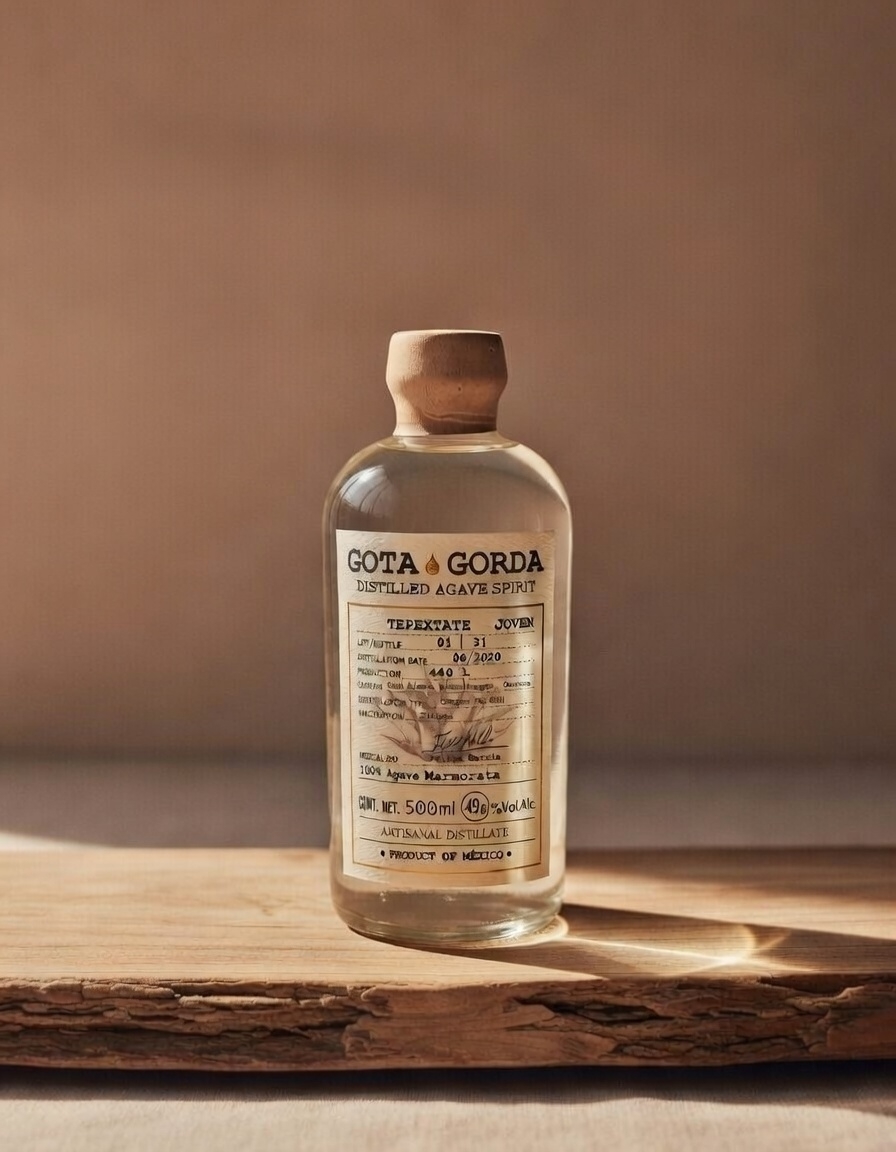
The idea started as a joke. We were tasting Gota Gorda's tepextate — wild agave, twenty-five years in the ground, green coffee and toasted fennel on the palate — and someone said, "This would be incredible with Stilton." We laughed. Then we tried it. Nobody laughed after that.
Mezcal and cheese is not an obvious combination. Wine and cheese, yes. Beer and cheese, certainly. Even whisky and cheese has its advocates. But mezcal's smokiness, its mineral backbone, its sheer intensity — could it really stand alongside Britain's great cheeses without one overwhelming the other?
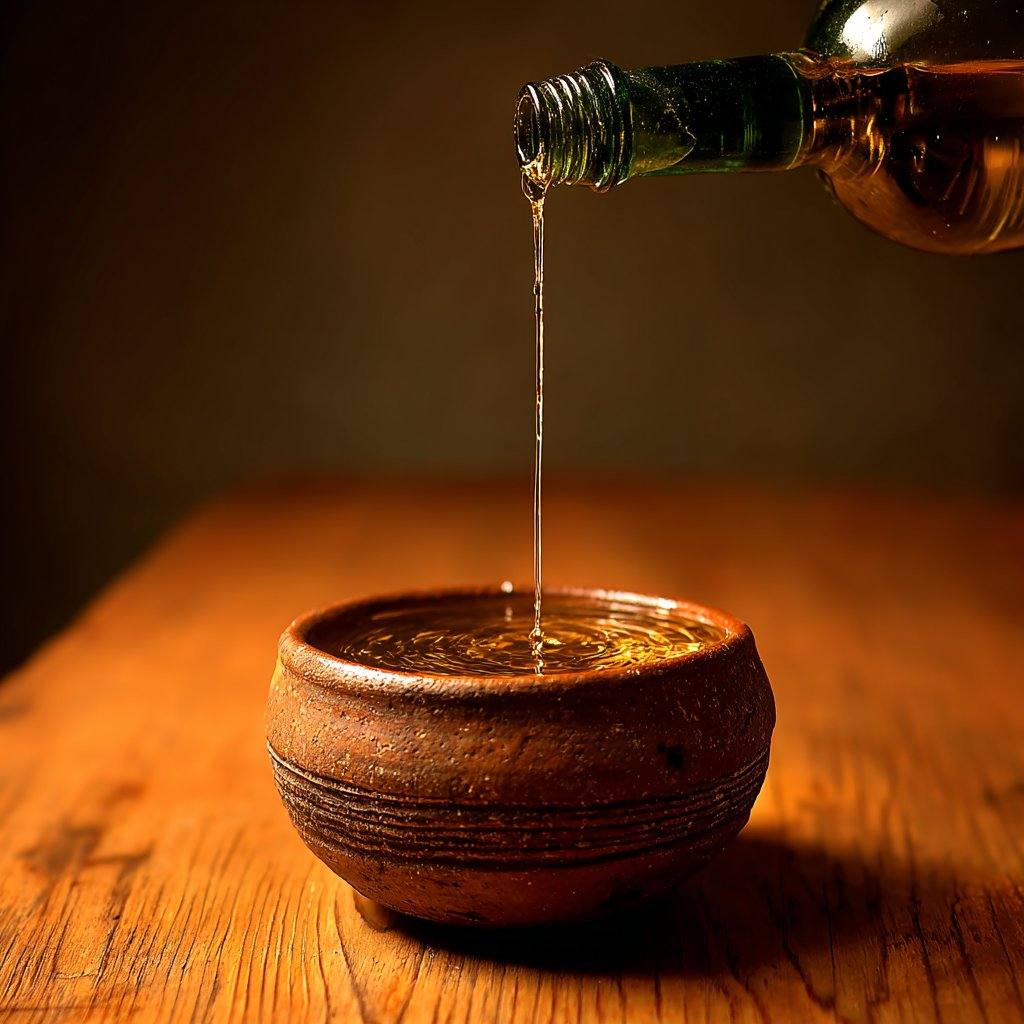
We spent an afternoon finding out. Four British cheeses. One bottle of Gota Gorda Tepextate. A clay copita. A notebook. What follows are the results.
The Spirit
Tepextate (Agave Marmorata) is a wild agave that grows on rocky hillsides at altitude, often in places only reachable on foot. It takes between fifteen and twenty-five years to reach maturity. You cannot cultivate it — or rather, you can try, but the results are never the same as the wild plant that has spent decades drawing minerals from volcanic soil and surviving drought, frost, and neglect.
Gota Gorda's tepextate is distilled by Felipe Garcia in copper alembic stills. The nose offers green coffee and dry grass. The palate is complex: cedar, toasted fennel, wet stone, and a long herbal finish. At 49.6%, it has the structure to stand up to strong flavours without losing its own identity.
The Cheeses
1. Westcombe Cheddar (Somerset)
A clothbound raw-milk cheddar aged eighteen months. Nutty, savoury, with a crystalline crunch from tyrosine crystals. We expected the cheddar to clash with the smoke. Instead, the two found a middle ground — the cheese's umami depth amplified the tepextate's mineral quality, while the spirit's herbal finish cut through the cheddar's richness. A natural pairing.
2. Colston Bassett Stilton (Nottinghamshire)
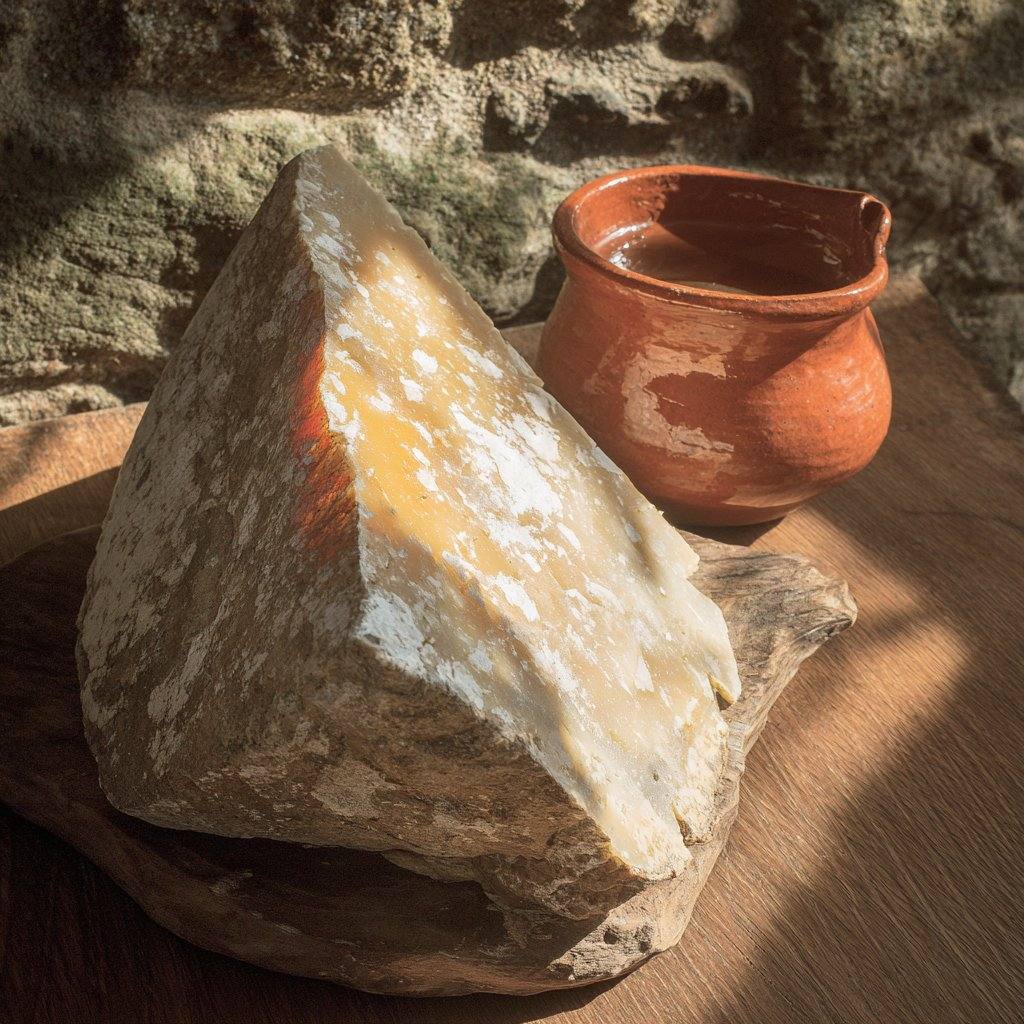
The pairing that started the experiment. Rich, creamy, salty, with the distinctive blue veining that gives Stilton its tang. With the tepextate, something unexpected happened: the blue mould's sharpness softened, revealing a sweetness underneath that we'd never noticed before. The mezcal's smoke wrapped around the Stilton like a warm blanket. This was the best pairing of the day. Possibly the best pairing we've ever tried.
The mezcal's smoke wrapped around the Stilton like a warm blanket. This was the best pairing of the day. Possibly the best pairing we've ever tried.
3. Stinking Bishop (Gloucestershire)
A washed-rind cheese with an aroma that precedes it into the room. Soft, oozing, pungent. Against the tepextate, it was almost too much — two big personalities competing for attention. But as the cheese warmed on the palate and the mezcal's finish extended, they found a rhythm. The spirit's dry, fennel-inflected finish acted as a reset, cleansing the palate of the cheese's funk and inviting another bite. Not the most harmonious pairing, but easily the most entertaining.
4. Stichelton (Nottinghamshire)
Raw-milk blue, often described as what Stilton used to taste like before pasteurisation became standard. Creamier than Colston Bassett, with a gentler blue character and notes of butter and honey at the edges. With the tepextate, the effect was elegant rather than dramatic. The cheese's creaminess rounded off the spirit's more angular notes, while the mezcal's complexity added layers to each bite. A refined, contemplative pairing — the one we'd serve at a dinner party.
A Framework for Pairing
Based on this tasting, a few principles emerged. Hard, aged cheeses (cheddar, Comté, Manchego) pair well because their concentrated flavours can match the mezcal's intensity. Blue cheeses are extraordinary partners — the salt and tang create a counterpoint that neither element has alone. Soft washed-rind cheeses work but require attention; they can overwhelm or be overwhelmed.
The key is balance. Mezcal at 49.6% is not a wallflower. It needs a cheese with enough character to stand alongside it, and enough fat to coat the palate against the spirit's heat.
We'd encourage anyone with a bottle of tepextate and access to a good cheesemonger to run their own experiment. Start with a blue. You might be surprised by what you find.