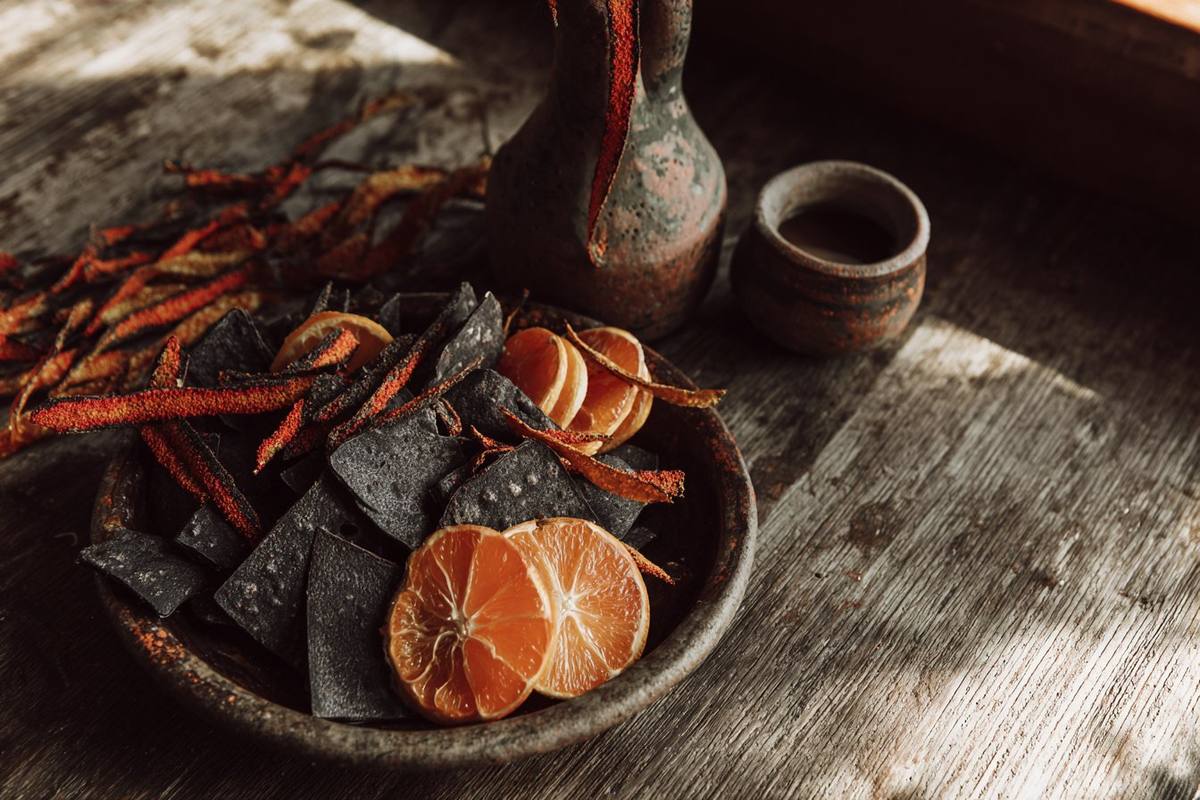
In Oaxaca, mezcal is rarely drunk alone. It accompanies food — orange slices dusted with sal de gusano, tlayudas, chapulines, mole. But mezcal’s complexity also makes it a remarkable partner for food from other traditions, including the UK’s.
The Traditional Way
Orange and sal de gusano. The classic pairing. Sal de gusano is a salt made from ground gusano worm, dried chilli, and sea salt. A slice of orange dipped in it, taken between sips of mezcal, creates a brilliant interplay of sweet, salty, smoky, and citrus. If you can source sal de gusano in the UK (specialist Mexican grocers carry it), this is the place to start.
Chocolate
Mezcal and chocolate share deep roots in Mexican culture. A square of high-cacao dark chocolate (70%+) alongside an espadín is extraordinary — the roasted notes in both amplify each other, while the chocolate’s fat softens the spirit’s heat. Try Gota Gorda’s Espadín Capón with bitter chocolate. The flavour overlap is uncanny.
Cheese
British cheese and mezcal is a pairing that deserves wider recognition. Hard, aged cheeses work best: a mature Cheddar, a crumbly Lancashire, or a sharp Stilton. The smoke and mineral qualities of mezcal complement the umami and salt of aged cheese in the same way whisky does — but with more complexity and less sweetness.
Seafood
Oysters. The brininess of a fresh oyster alongside the mineral quality of a tepextate or tebequil is a combination that makes immediate sense. The spirit’s smoke acts as a counterpoint to the ocean, like a driftwood fire on a beach. Ceviche works too — the citrus bridge between the two is natural.
Charcuterie
Dry-cured meats, especially those with a herbal or peppery character — bresaola, coppa, fençhona — pair well with the green, herbaceous qualities of wild agave mezcals.
The principle is simple: mezcal has smoke, mineral, fruit, and earth. Pair it with foods that share or contrast those qualities. Avoid anything too sweet — sugar overwhelms the spirit. Avoid anything too spicy — the alcohol amplifies heat.