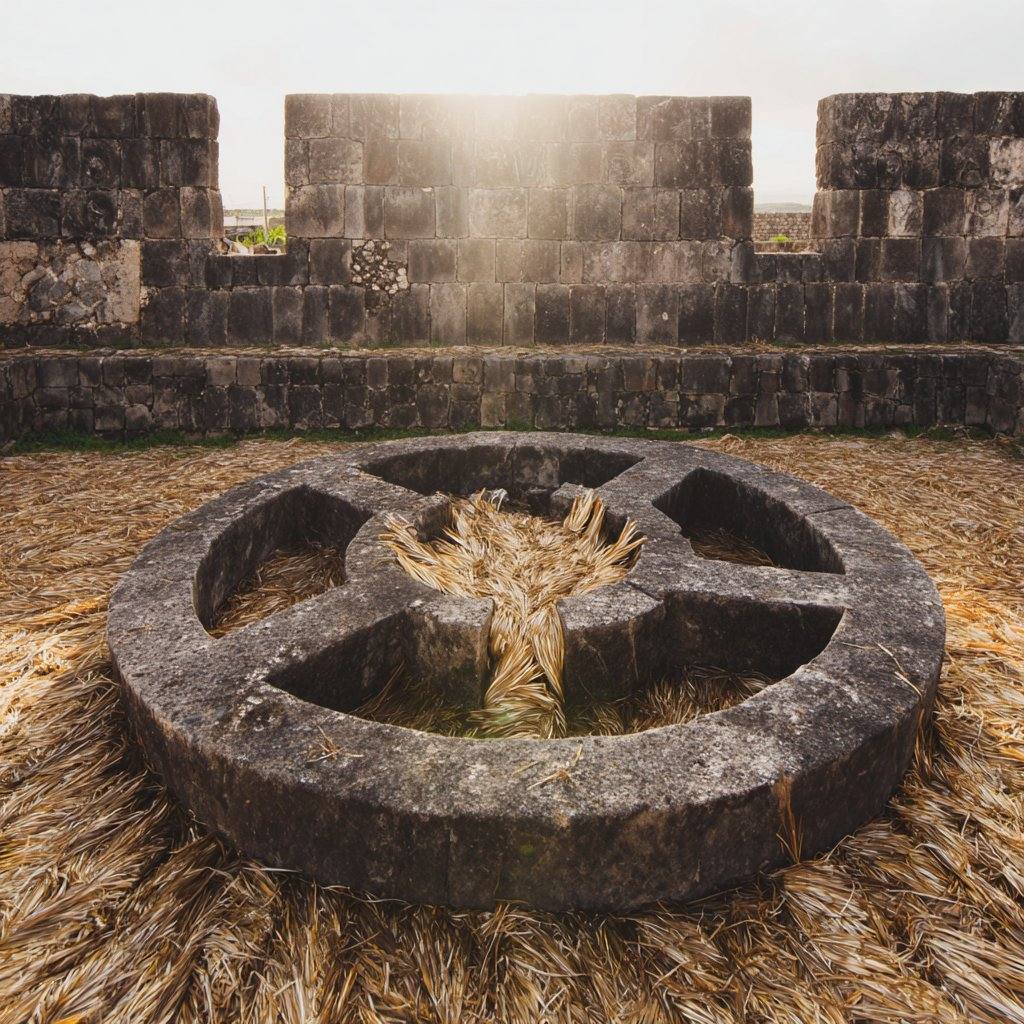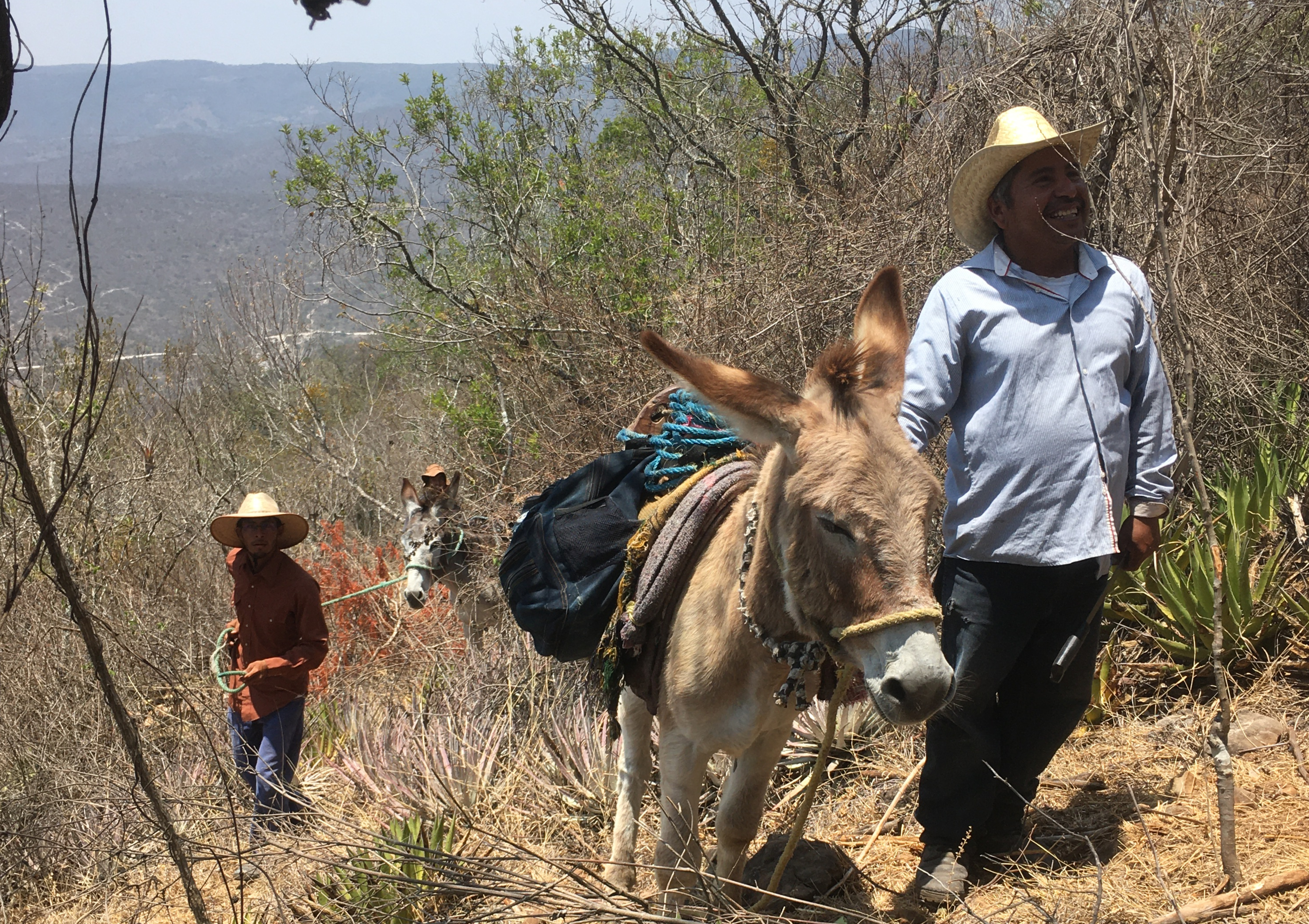
The palenque sits at the end of a dirt road in San Simón Almolongas, a village in the Central Valleys of Oaxaca that doesn't appear on most maps. A tin roof over packed earth. A stone tahona the size of a small car, its groove worn smooth by decades of use. A horse named Canela, who pulls the wheel. And Felipe Garcia, standing by the copper alembic, adjusting the fire with the kind of attention most people reserve for newborn children.
Felipe is a third-generation mezcalero. His grandfather made mezcal here. His father made mezcal here. Felipe has been making mezcal since he was old enough to help carry piñas from the pit oven to the crushing area — twelve years old, by his recollection, though he's not entirely sure. Time in San Simón Almolongas is measured in harvests and distillations, not calendars.
The Process
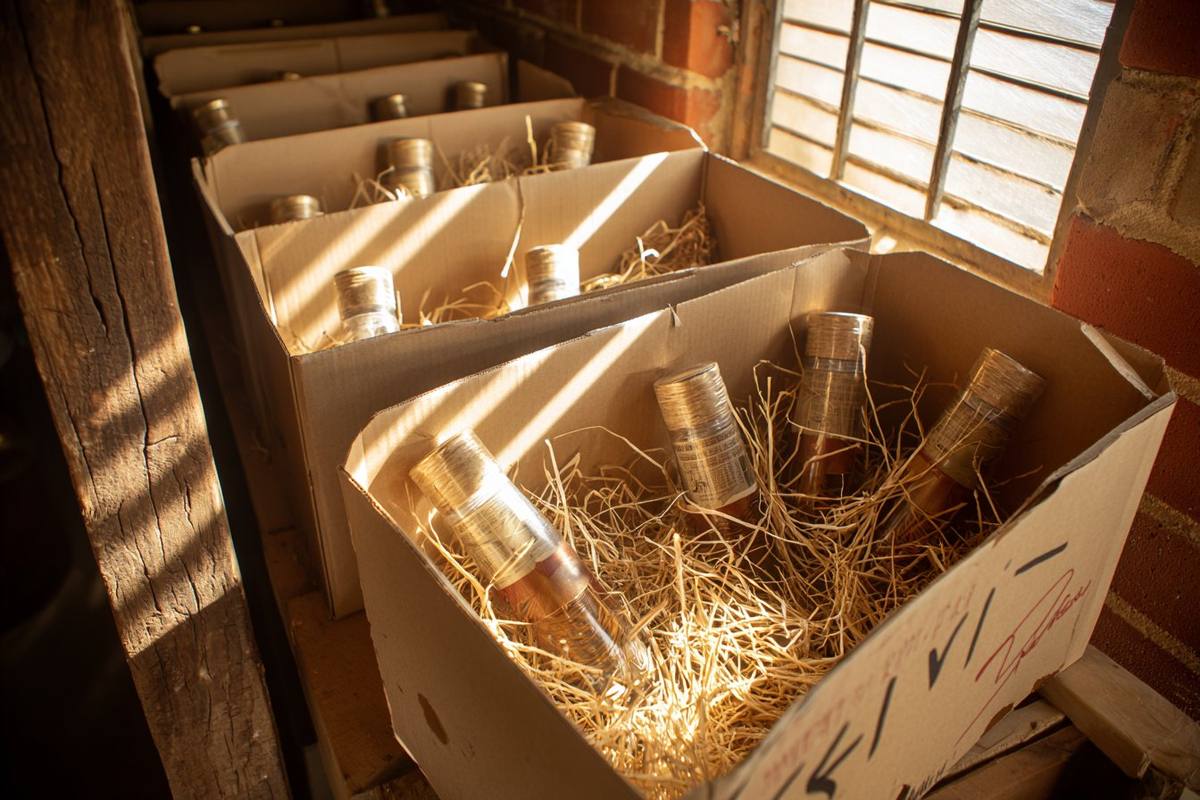
Every bottle of Gota Gorda that Mescalito brings to the UK was made by Felipe's hands using equipment that hasn't fundamentally changed in a century. The agave hearts are roasted in an earthen pit oven for five to seven days, depending on the species and the weather. They're crushed with the tahona — the stone wheel that Canela pulls in slow circles for hours. The crushed fibre ferments in open pine vats, exposed to the wild yeasts that drift through the Oaxacan air. And then it's distilled, twice, in copper alembic stills that Felipe maintains himself.
There is no automation. No temperature gauges on the fermentation vats. No digital readout on the still. Felipe knows when the fermentation is ready by the sound it makes — a low, irregular bubbling that he describes as "the agave talking." He knows when to make the cuts during distillation by taste, by smell, and by the size of the bubbles in a hollowed-out gourd called a jícara.
You cannot make good mezcal in a hurry. The agave knows. The fire knows. If you try to rush, they will not cooperate.
Three Generations
Felipe's grandfather began making mezcal in the 1950s, when it was a local drink sold in unmarked bottles at village markets. There was no denomination of origin, no export market, no Instagram. Mezcal was simply what people in these valleys made, the way people in Burgundy made wine or people in Kentucky made bourbon — because the raw materials were there and the knowledge had been passed down.
His father expanded the operation slightly, adding a second still and selling to buyers from Oaxaca City. But the core method never changed. The pit oven. The tahona. The copper alembic. The wild fermentation. Each generation refined the technique without altering the fundamentals.
Felipe, for his part, has no interest in modernising. He's been approached by brands offering to install mechanical crushers, stainless steel fermentation tanks, automated stills. He's declined every time.
"My grandfather's mezcal tasted like this place," he says, gesturing at the valley — the mesquite trees, the red earth, the distant mountains. "If I change the process, it won't taste like this place any more. It will taste like a factory."
What It Tastes Like
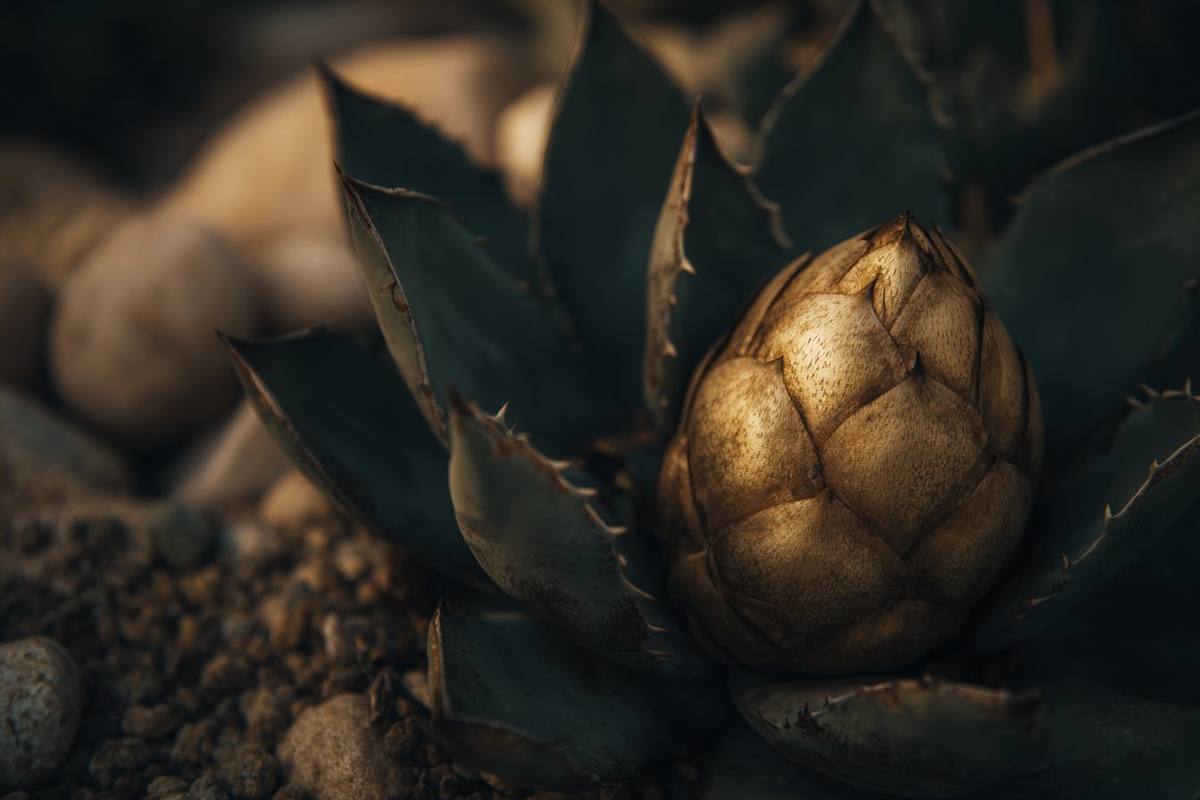
Felipe's espadín capón — the expression made from castrated agave, where the flowering stalk is cut to concentrate sugars — is the most accessible of the Gota Gorda range. Citrus peel and hay on the nose. Bitter chocolate and ripe plum on the palate, with a gentle smokiness that lingers without overwhelming.
His tepextate is something else entirely. Wild agave, harvested from rocky hillsides where it can take a quarter of a century to mature. Green coffee and dry grass, followed by cedar, toasted fennel, and a finish that evolves for minutes after your last sip. Only 57 bottles exist from this batch.
The jabalí-tebequil blend — a co-fermentation of two wild species — is perhaps the most remarkable. Petrichor, wet leaves, red clay on the nose. Red fruits and white pepper on the palate. Forty-one bottles. And the single-species tebequil, of which only twenty-three bottles were produced, is the rarest expression: slate and fermented plum, hay and white pepper, with a finish that goes on and on.
Every bottle carries the memory of a specific harvest, a specific fire, a specific week of fermentation. No two batches are the same. That's not a flaw. That's the whole point.
In an industry increasingly shaped by scale and consistency, Felipe Garcia represents something essential: the idea that the best spirits are made by people who know their land, their agave, and their craft so intimately that no amount of technology could replicate what they produce. His mezcal tastes the way it does because he is who he is, in the place where he is, doing what three generations of his family have done before him.
That's not a marketing story. It's just the truth.