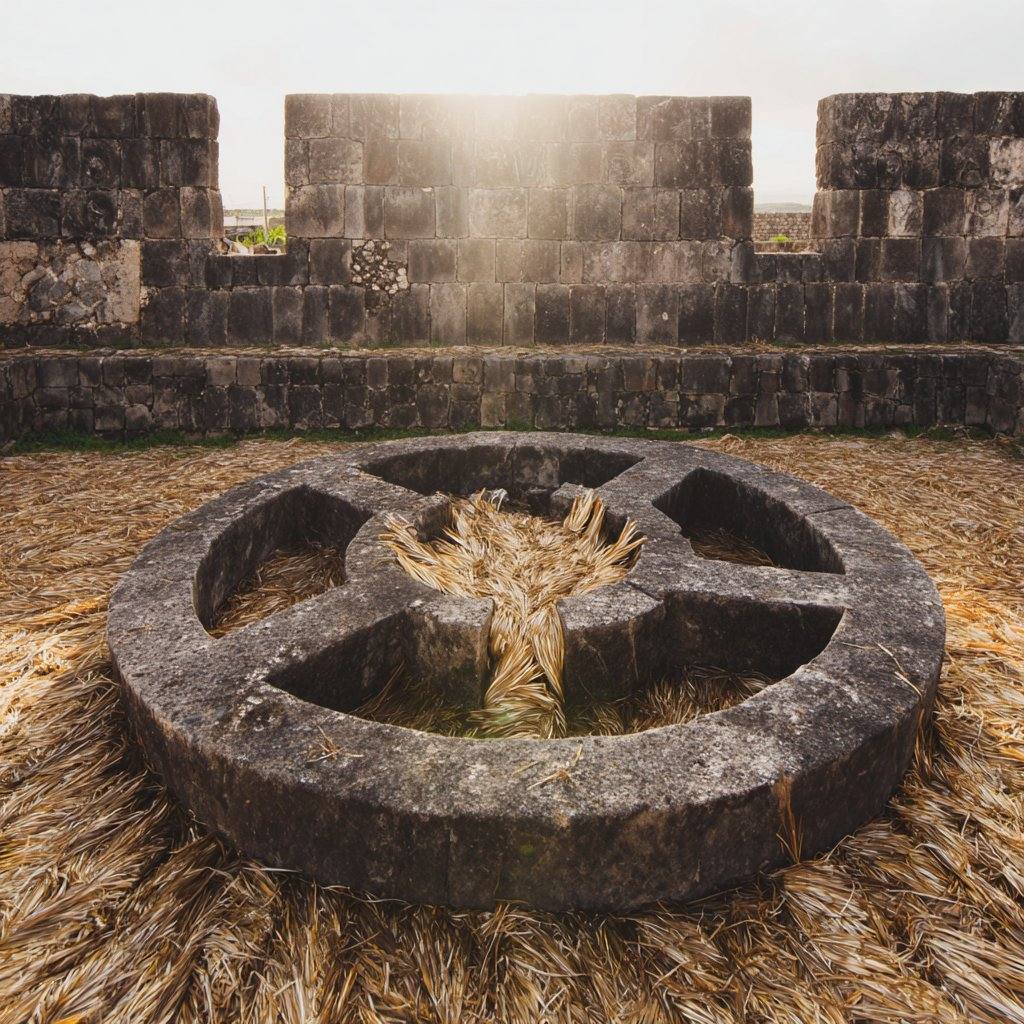
The tools used in mezcal production are not incidental. Each one shapes the spirit in specific ways. Understanding the tahona, the mazo, and the other implements of the palenque is understanding what mezcal is and how it gets that way.
The Tahona
A massive circular stone — often weighing over a tonne — drawn by a horse or mule in a circular path over the roasted agave. The tahona crushes the piñas slowly and incompletely, producing a coarse mash of fibre and juice. This incomplete extraction is actually desirable: the fibre that remains contributes flavour and texture during fermentation and distillation. Tahona-crushed mezcal tends to have more body and more vegetal complexity than mechanically processed spirits.
Felipe Garcia uses a tahona at his palenque in San Simón Almolongas. The stone has been used by his family for generations.
The Mazo
Hand-wielded wooden mallets. The most labour-intensive crushing method and the one required for ancestral classification. Workers strike the roasted piñas repeatedly until they are sufficiently broken down. It is exhausting, slow, and produces a mash with a distinctive texture — less uniform than the tahona, with more variation in fibre size and juice extraction. Felix Ángeles uses mazo at his palenque in Santa Catarina Minas.
The Coa
The coa de jima is the long-handled blade used to harvest agave. The jimador uses it to trim the pencas (leaves) from the plant and expose the piña. It is the first tool in the process and one of the most iconic images of mezcal culture.
The Machete
Used throughout the process: splitting piñas before roasting, trimming agave in the field, cutting wood for the pit oven. A good machete is as essential as a good still.
These are not museum pieces. They are working tools, used daily, passed between generations. The tahona Felipe Garcia uses has been crushing agave at the same palenque for decades. The tools carry the history.