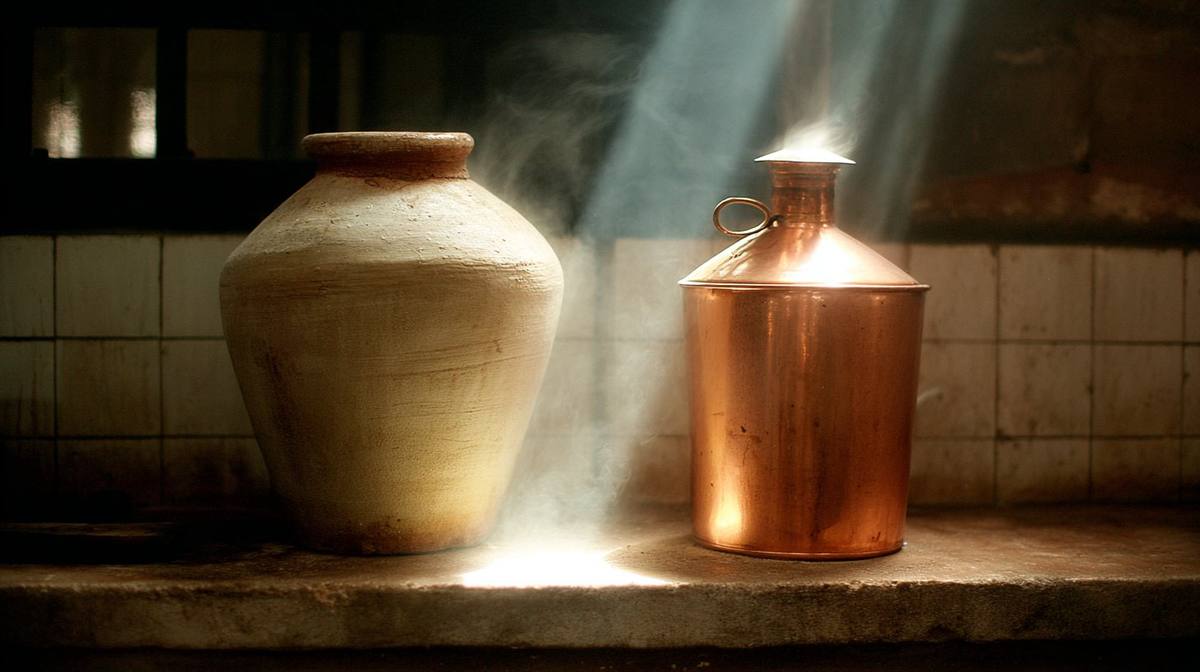
Since 2017, Mexican regulation has divided mezcal production into three legally defined categories: Ancestral, Artisanal, and simply Mezcal (often called industrial). These are not marketing terms. They are legal classifications that dictate exactly which equipment and methods may be used at every stage of production.
Mezcal (Industrial)
The base category places the fewest restrictions on production. Agave can be cooked in autoclaves or diffusers rather than pit ovens. It can be crushed by mechanical shredders. Fermentation can happen in stainless steel tanks with commercial yeast. Distillation can use column stills. The result is efficient, high-volume, consistent — and, at its worst, a spirit stripped of the character that makes mezcal extraordinary.
This is not to say all industrial mezcal is bad. Some large-scale producers make respectable spirits. But the category permits shortcuts that fundamentally change the relationship between the spirit and the land, the maker, and the tradition.
Artisanal
Artisanal mezcal requires pit-roasting of agave over wood and volcanic rock. Crushing must be done by tahona (stone wheel), Chilean mill, mazo (hand mallets), or by hand. Fermentation must occur in stone, earth, wood, or animal-skin vessels with no temperature control. Distillation must use direct-fire copper alembics or clay pots — no column stills.
This is where the craft lives. Artisanal production is hands-on, small-scale, and shaped by the decisions of the maestro mezcalero at every stage. The majority of mezcal worth seeking out falls into this category.
Ancestral
Ancestral is the most restrictive classification. It shares all of artisanal’s requirements but goes further: crushing must be done by mazo or tahona only (no mills), and distillation must use clay pots — no copper permitted. This is the oldest continuous method of mezcal production, and it produces spirits with a distinctive softness, minerality, and earthiness that copper cannot replicate.
Only a small number of producers work at the ancestral level. The process is slower, more labour-intensive, and produces smaller yields. But the results can be extraordinary — spirits that taste like the earth they came from.
Gota Gorda works across both artisanal and ancestral categories. Felipe Garcia distils in copper; Felix Ángeles distils in clay. Both are masters of their method.
Does It Matter?
Yes. Not because one category is inherently “better” than another, but because the category tells you something real about what is in the bottle. It tells you whether the agave was pit-roasted or pressure-cooked, whether fermentation relied on wild yeast or commercial cultures, whether the maestro made the cuts by instinct or a machine made them by algorithm.
When you see Mezcal Ancestral on a label, you know that every stage of production used pre-industrial methods. When you see Mezcal Artisanal, you know the spirit was made by hand, with fire, stone, wood, and time. These are not aspirational labels. They are legally enforced descriptions of how the spirit was made.