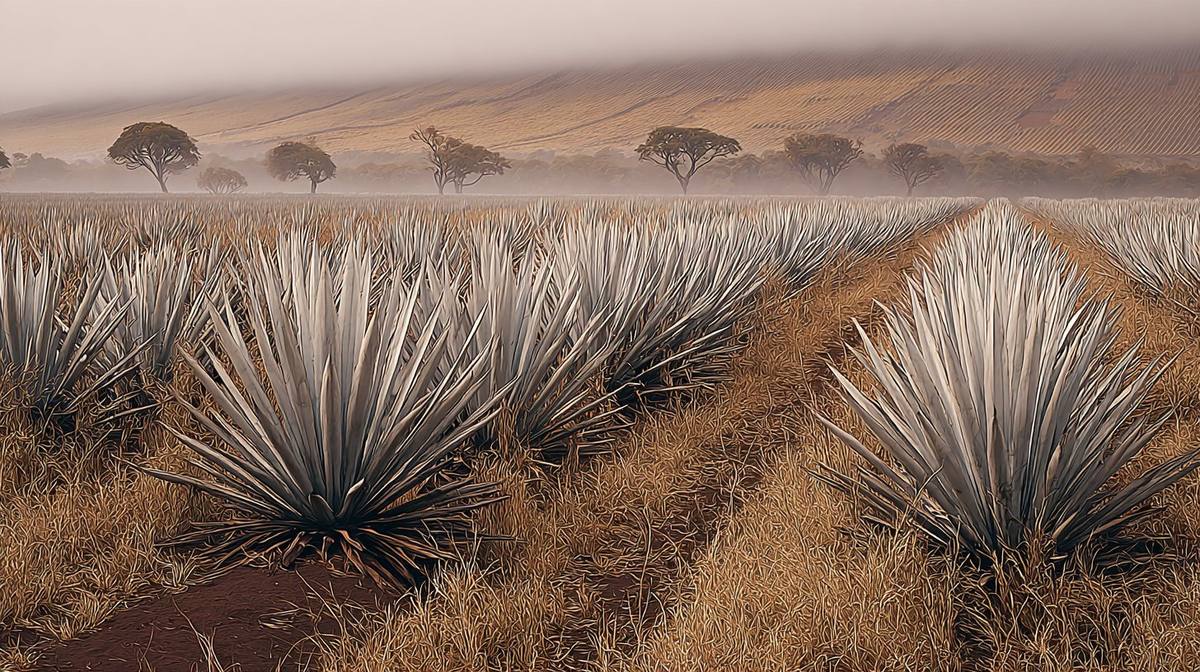
Mezcal is a spirit distilled from the cooked heart of the agave plant. That sentence is true, but it is a bit like saying wine is fermented grape juice. It tells you what something is without telling you anything about why it matters.
What makes mezcal extraordinary is everything that surrounds that simple definition: the sheer diversity of agave species used, the ancient methods of production, the families who have been making it for generations, and the way the spirit captures the specific character of a plant, a place, and a moment in time in a way that almost no other drink on earth can match.
If you are coming to mezcal for the first time, this guide will give you a foundation. If you already know a little, it will fill in the gaps. And if you already love mezcal, it might offer a way of thinking about what you’re drinking that deepens the experience.
Agave: The Plant That Gives Everything
Agave is not a cactus. It is a succulent — a member of the Asparagaceae family, related to asparagus and yucca. There are over 200 species of agave in Mexico, and at least 50 of them can be used to make mezcal. This is one of the things that makes the spirit so remarkable: the sheer variety of raw material, each species producing a distillate with a completely different character.
The most commonly used agave is Agave angustifolia, known as espadín. It is cultivated, relatively fast-growing (six to eight years to maturity), and produces a spirit that is clean, versatile, and generous — a good starting point for anyone new to the category.
But the world of mezcal extends far beyond espadín. Wild agaves like tepextate (Agave marmorata) grow on rocky cliff faces and can take fifteen to twenty-five years to reach maturity. Jabalí (Agave convallis) is notoriously unpredictable in fermentation. Tobalá (Agave potatorum) grows in the shade of oak trees at high altitude. Each species has its own growth habit, its own sugar profile, its own relationship with the landscape — and each produces a distillate that tastes fundamentally different from the next.
This is why mezcal is often compared to wine rather than to other spirits. Just as a Pinot Noir from Burgundy tastes nothing like a Malbec from Mendoza, a mezcal made from tepextate tastes nothing like one made from espadín. The agave variety is the single most important factor in determining the character of the spirit.
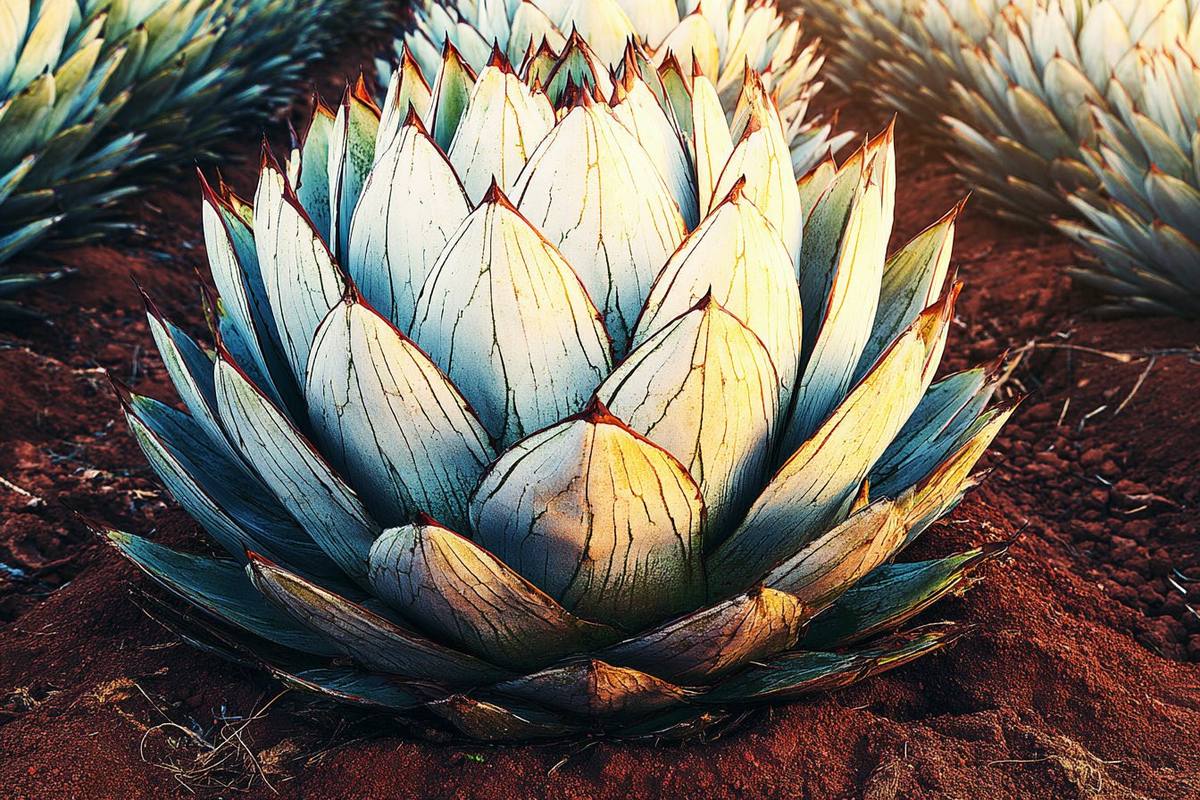
The part of the agave used to make mezcal is called the piña — literally “pineapple,” because of its shape once the long, spiky leaves have been cut away with a machete. The piña is the dense, starchy heart of the plant, where it stores the sugars that will eventually be converted into alcohol.
Harvesting agave — particularly wild agave — is hard physical work. The plants often grow in remote, steep terrain. They must be cut at precisely the right moment of maturity: too early and the sugar content is insufficient; too late and the plant may have already sent up its quiote (flowering stalk), redirecting its energy away from the piña.
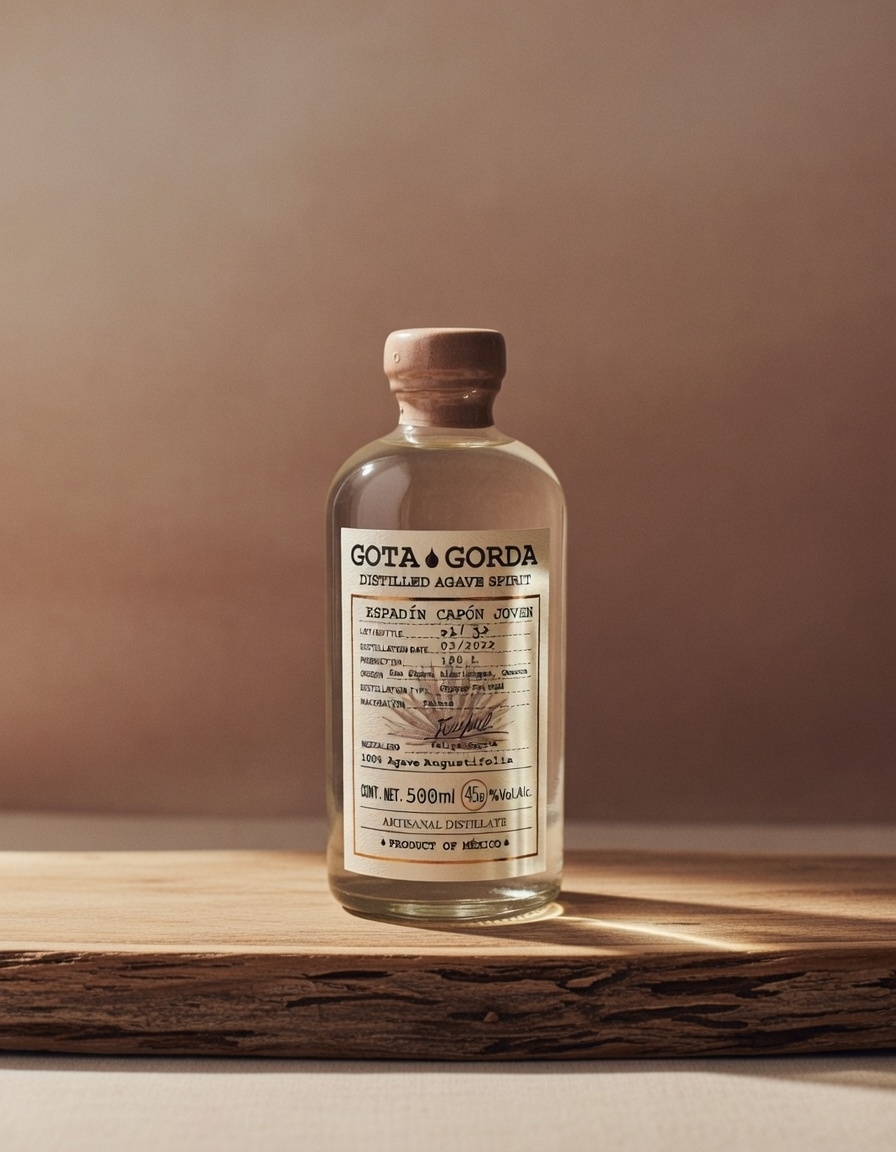
There is one exception: capón. A capón agave is one whose quiote has been deliberately cut before it can flower, forcing the plant to send its sugars back into the piña. The result is a richer, more concentrated spirit. Gota Gorda’s Espadín Capón is made from agaves treated this way.
How Mezcal Is Made
The production of mezcal follows a sequence that has remained fundamentally unchanged for centuries: harvest, roast, crush, ferment, distil. What varies — and what makes each producer’s work unique — is the specific method and equipment used at each stage.
Roasting
After harvest, the piñas are roasted. This is what gives mezcal its most famous characteristic: smoke.
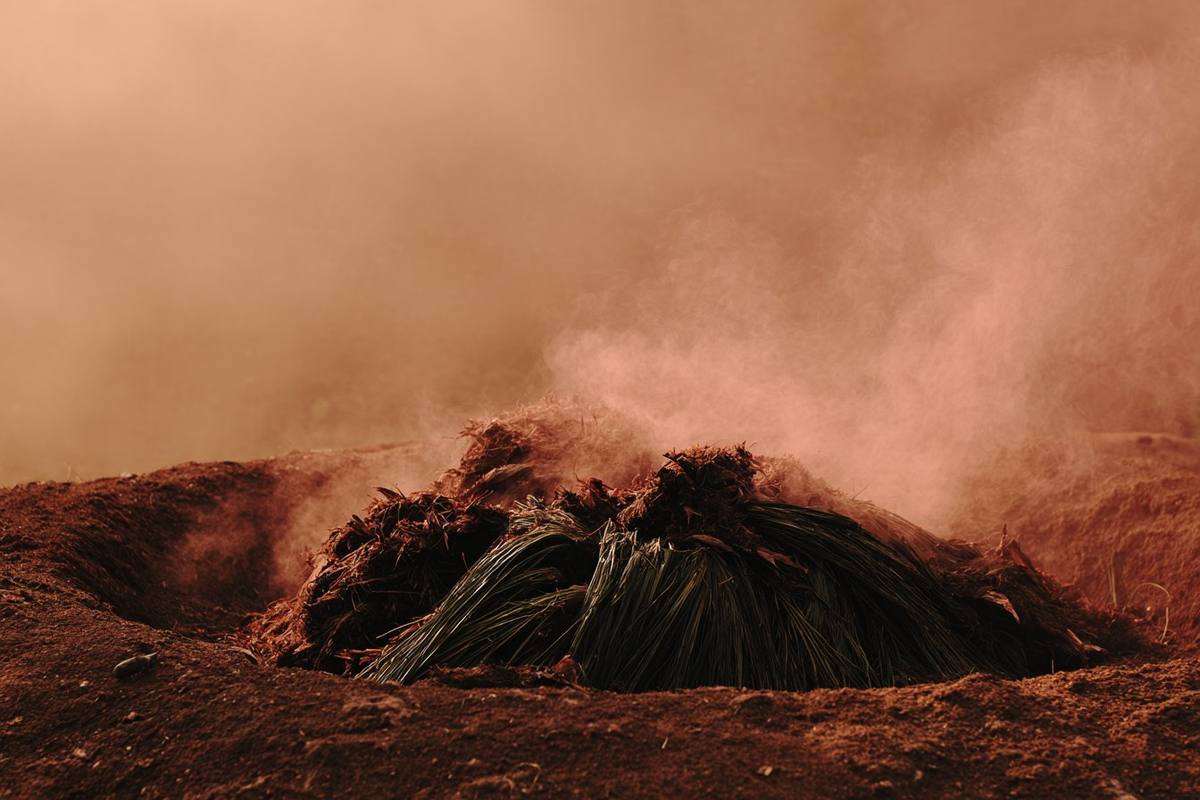
The traditional method uses an earthen pit oven — a conical hole dug into the ground, typically two to three metres across and a metre or more deep. The pit is lined with volcanic rocks, which are heated with a wood fire for hours until they are searingly hot. The piñas are placed on the rocks, covered with agave fibre and earth, and left to roast for three to five days.
During this time, the heat slowly converts the agave’s complex carbohydrates (specifically inulin) into fermentable sugars. The wood smoke and the minerals in the volcanic rock permeate the agave, contributing the smoky, earthy flavours that define the spirit.
This is not an industrial process. There is no thermostat, no timer. The maestro mezcalero — the master distiller — judges the roast by experience, by the smell of the steam escaping from the mound, by the colour of the earth.
Crushing
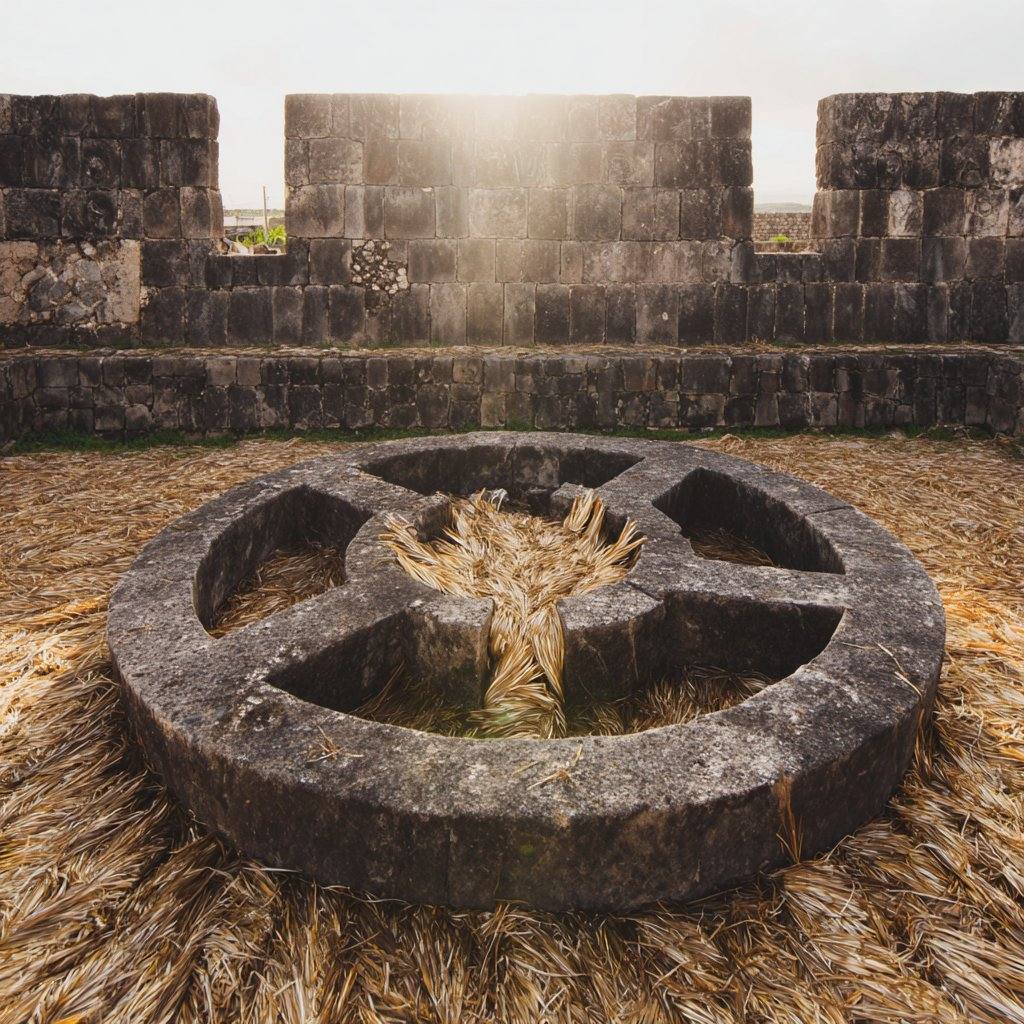
Once roasted, the piñas must be crushed to extract their sweet juice. There are three traditional methods:
Tahona — a large stone wheel, typically weighing over a tonne, drawn in a circular path by a horse or mule. This is the method used by Felipe Garcia for all of Gota Gorda’s artisanal expressions.
Mazo — hand-wielded wooden mallets. This is the most ancient and labour-intensive method, used in ancestral production. Felix Ángeles uses this method for Gota Gorda’s Espadín Ancestral.
Mechanical shredder — permitted under artisanal classification but not ancestral. Faster, but produces a different texture in the crushed agave that affects fermentation.
Fermentation
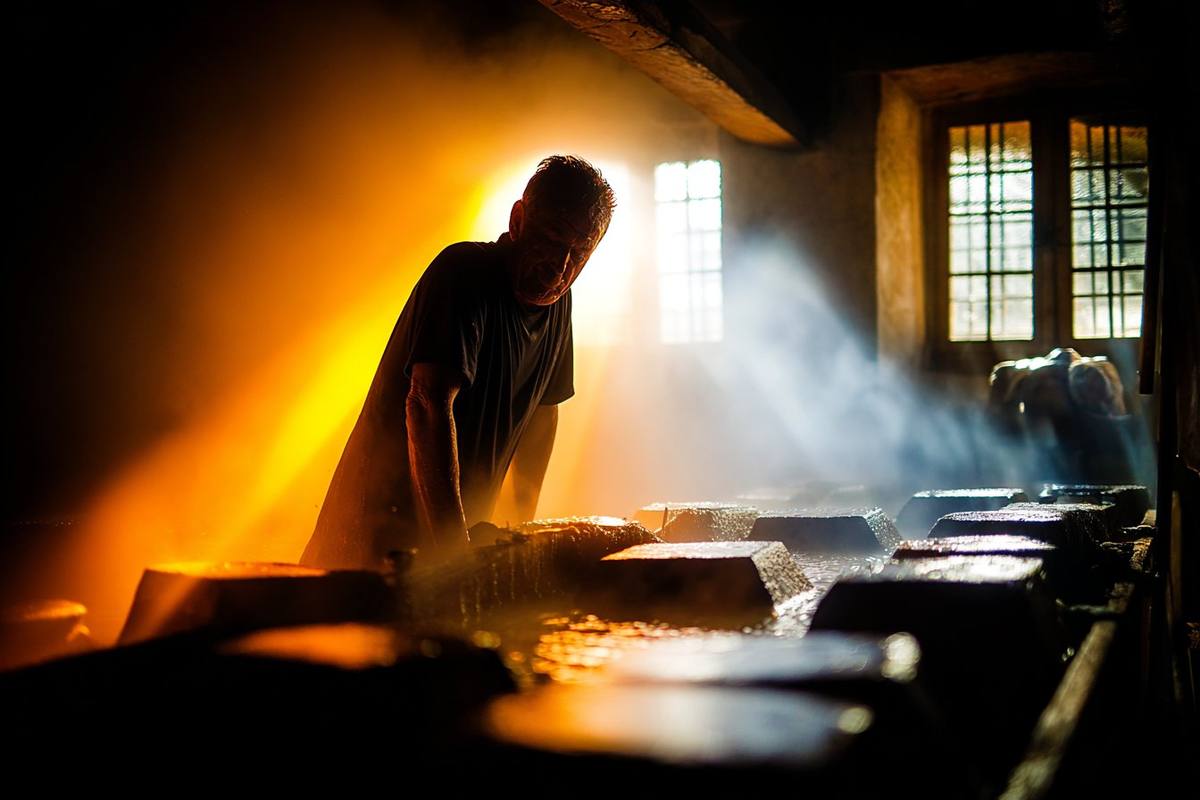
The crushed agave — juice and fibre together — is transferred to open-air fermentation vessels. In artisanal and ancestral production, these are typically wooden vats made from pine, though stone, earth, and animal-skin containers are also traditional.
What happens next is one of the most remarkable aspects of mezcal production: natural, spontaneous fermentation. No yeast is added. No temperature is controlled. The fermentation relies entirely on the wild, ambient microorganisms present in the environment — the yeasts and bacteria that live in the air, on the wood of the vats, in the soil of the palenque.
This means that the fermentation is shaped not just by the agave but by the air, the altitude, the season, and the specific micro-ecology of the place where the spirit is made. Two palenques five kilometres apart, using the same agave variety and the same methods, will produce spirits that taste different — because the invisible life that drives fermentation is different.
Distillation
The fermented liquid is distilled. The method of distillation is one of the key distinctions between mezcal categories:
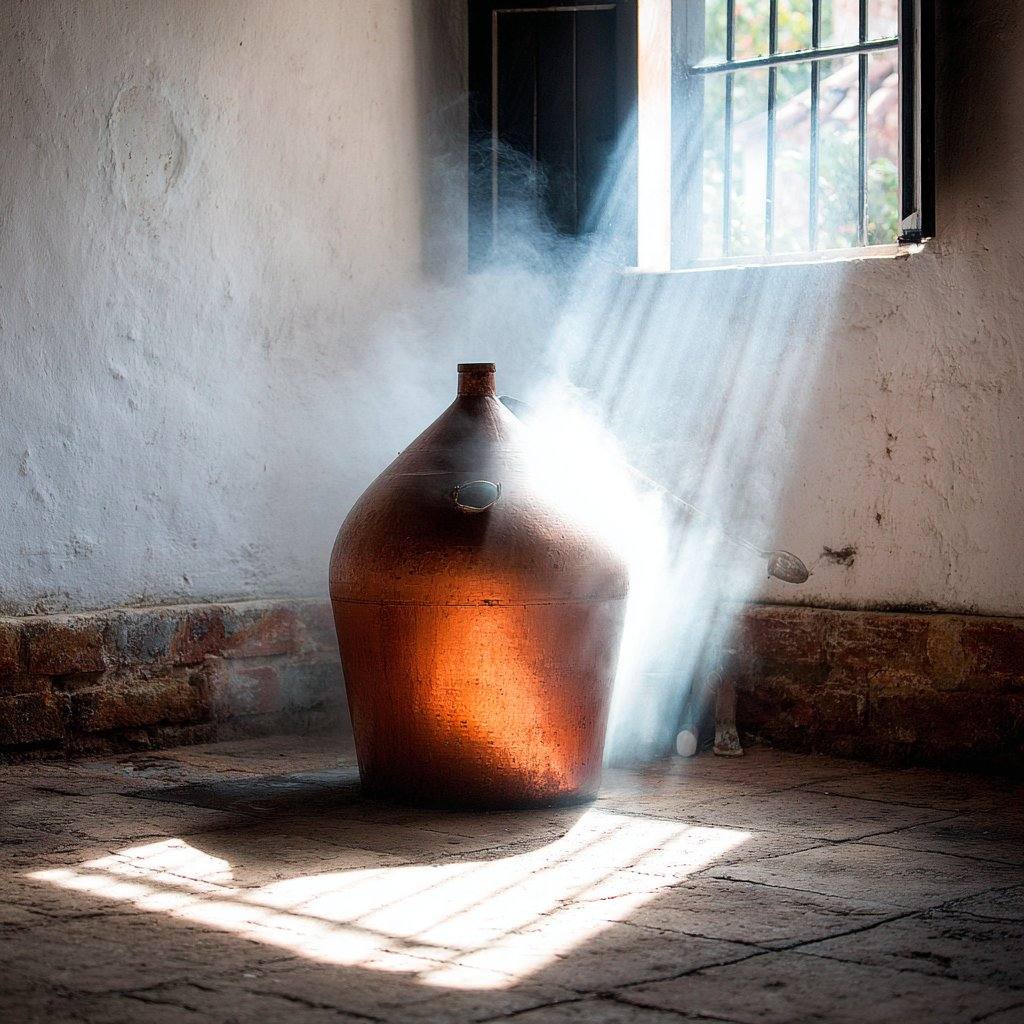
Copper alembic — a copper pot still, the standard for artisanal production. Copper is an efficient conductor of heat and helps remove certain sulphur compounds during distillation, producing a spirit with clarity and definition.
Clay pot — the traditional vessel for ancestral production. Clay distillation produces a spirit with a distinctive softness, roundness, and mineral quality that copper cannot replicate. The clay itself interacts with the vapours, contributing to the character of the final spirit.
In both cases, the maestro mezcalero tastes throughout the process, deciding by palate when to make the cuts — separating the heads, the heart, and the tails. There is no formula for this. It is skill, experience, and instinct refined over generations.
The Three Categories
Mexican law defines three categories of mezcal, based on the methods and equipment used in production. These are not marketing terms — they are legally regulated classifications that tell you something real about how the spirit was made.
Industrial (Mezcal)
Permits modern equipment at every stage: autoclaves for cooking, mechanical shredders, stainless steel tanks with commercial yeast, and continuous column stills. Mezcal made at scale.
Mescalito does not import industrial mezcal.
Artisanal (Mezcal Artesanal)
Requires pit-roasting and natural fermentation in wood, stone, or earth vessels. Allows copper alembic stills. Mezcal made by hand, at small scale, with traditional methods.
Four of Gota Gorda’s five UK expressions are artisanal distillates.
Ancestral (Mezcal Ancestral)
The most traditional classification. Requires pit-roasting, hand-crushing by mazo or tahona, and distillation in clay pots. No modern equipment permitted at any stage.
Gota Gorda’s Espadín Ancestral, produced by Felix Ángeles, is a certified mezcal ancestral.
A Note on “Destilado de Agave”
You may encounter bottles labelled “destilado de agave” or “agave distillate” rather than “mezcal.” This does not mean the spirit is of lower quality. It often means the opposite.
Mexico’s mezcal denomination of origin restricts the use of the word “mezcal” to spirits produced in certain designated states and regions. Some exceptional producers work outside these boundaries — or choose not to participate in the certification system for philosophical or practical reasons. Their spirits are made with the same methods, the same care, and the same agave, but they cannot legally be called mezcal.
Several of Gota Gorda’s expressions are labelled as agave distillates rather than mezcal. This reflects the specifics of their certification status, not any difference in quality or craft.
Mezcal and Tequila
The question comes up often, so let’s address it simply: all tequila is mezcal, in the same way that all Champagne is sparkling wine. Tequila is mezcal made exclusively from Agave tequilana (blue weber agave) in designated regions of Mexico — primarily Jalisco.
The practical difference is flavour. Tequila tends to be cleaner, sharper, and less smoky. Mezcal tends to be more complex, more varied, and yes, smokier — though “smoky” is only one dimension of what mezcal can be, and many mezcals are far more subtle than the stereotype suggests.
If you love tequila, mezcal is the door to a wider world. If you’ve never tried either, mezcal is the more interesting place to start.
How to Start Drinking Mezcal
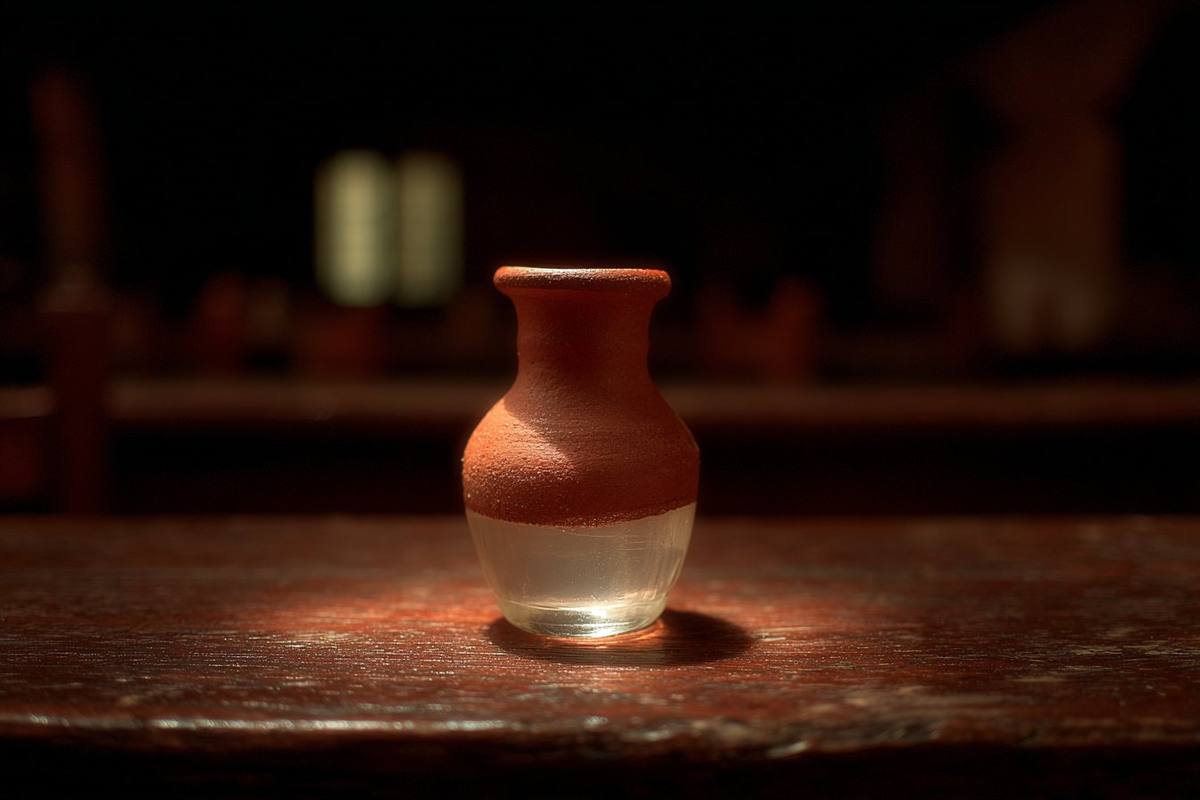
A copita or a small wide-mouthed glass. The traditional vessel for drinking mezcal is a clay copita — a small cup that allows the spirit to breathe and lets you appreciate the aroma before tasting. Every bottle of Gota Gorda comes with a handmade clay copita by Oaxacan artisan Javier Ruiz, so you are already equipped.
A small pour. Mezcal is sipped, not shot. Pour 30–40ml.
Patience. Let the spirit sit in the copita for a minute. Breathe over it before you taste — cup your hand over the top and then release. What do you smell? Smoke, yes, but what else? Fruit? Earth? Herbs? Flowers?
A sip, not a gulp. Let the mezcal coat your tongue. Notice how the flavour changes as it moves through your mouth. The first impression is often different from what lingers.
No ice, no mixer — at least the first time. Taste it neat so you understand what you’re working with. After that, do what you like.
And most importantly: there is no wrong way to enjoy it. The only rule in mezcal is to pay attention.