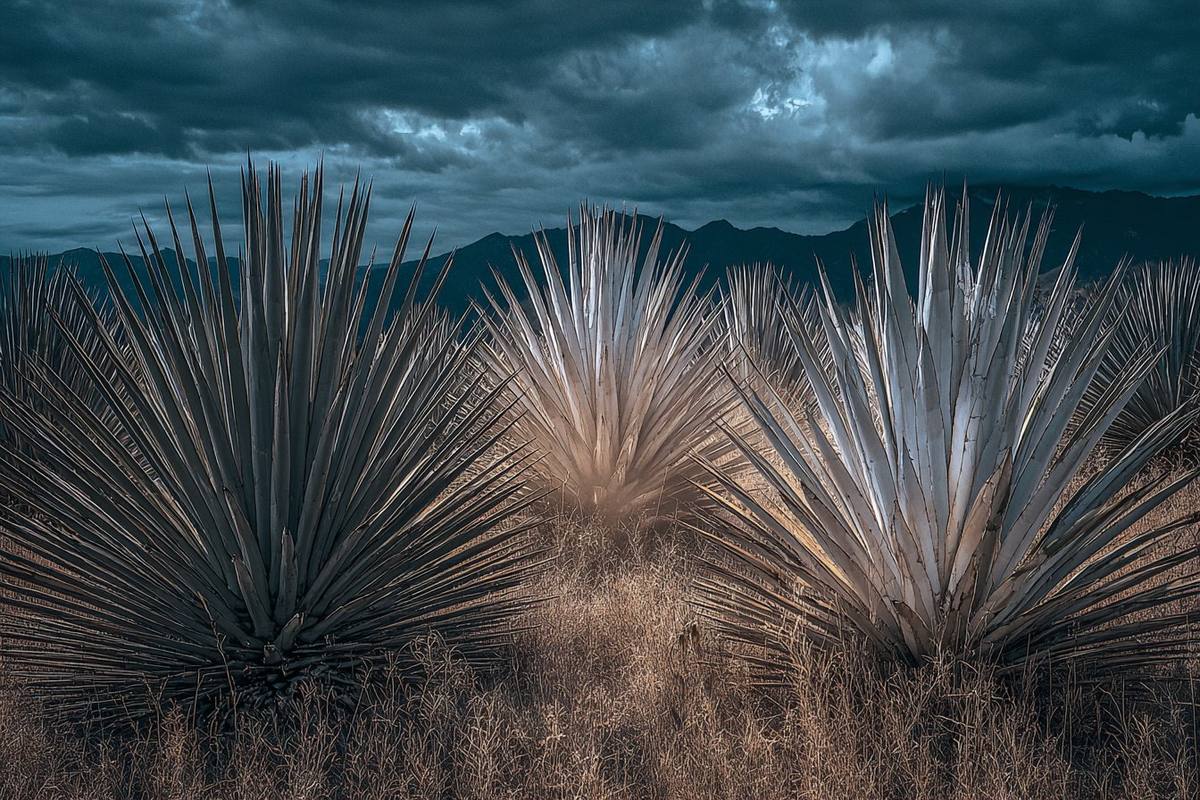
Mezcal begins with the agave — and the agave species used in production is the single biggest determinant of a spirit’s character. Over fifty species of agave are used in mezcal production across Mexico. Here are the ones you are most likely to encounter.
Espadín (Agave angustifolia)
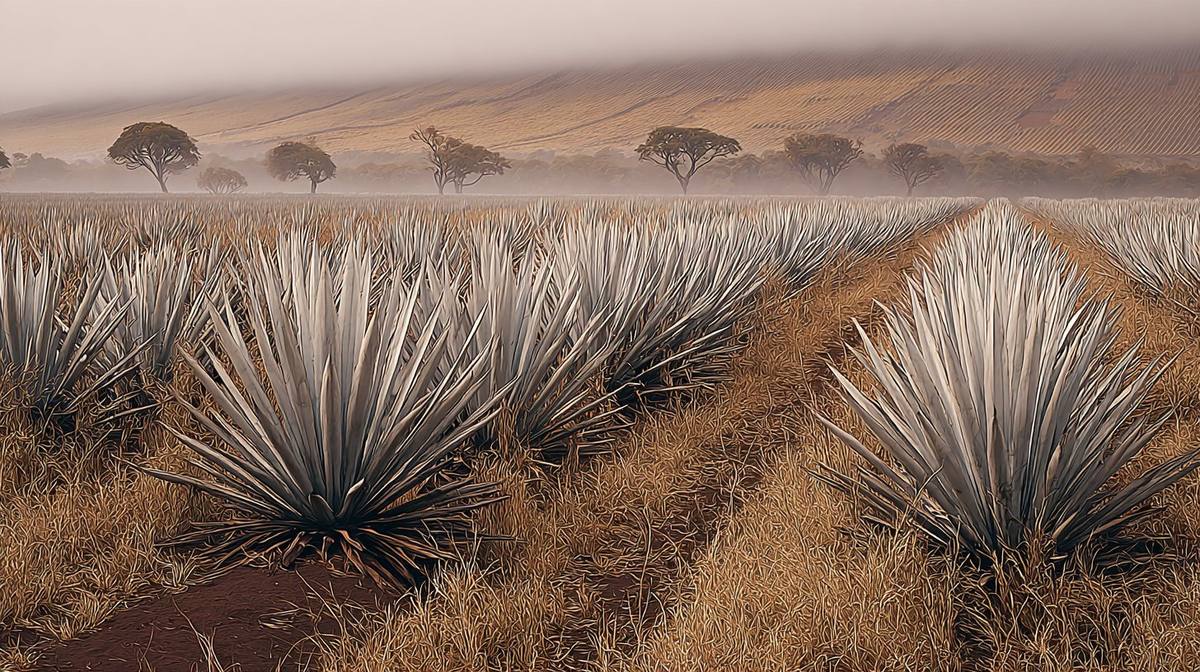
The workhorse. Espadín accounts for roughly 80% of all mezcal production. It is cultivated, relatively fast-growing (six to eight years to maturity), and produces generous yields. A well-made espadín is not simple — it can offer chocolate, roasted fruit, citrus, and cooked agave. It is the ideal starting point for anyone exploring mezcal. Gota Gorda’s Espadín Capón demonstrates what this species can achieve in skilled hands.
Tepextate (Agave marmorata)
Wild. Grows on rocky cliff faces and steep hillsides where cultivation is impossible. Takes fifteen to twenty-five years to mature. Produces spirits with intense herbaceous, mineral, and floral qualities — green coffee, cedar, geranium. Tepextate mezcal is always limited in quantity and always remarkable in character. See Gota Gorda Tepextate.
Tobalá (Agave potatorum)
Small, compact, slow-growing. Tobalá grows in the shade of oak trees at altitude and can take twelve to fifteen years to mature. It produces a spirit of unusual delicacy — floral, fruity, sometimes tropical. It is one of the most prized wild agaves and increasingly rare due to overharvesting.
Jabalí (Agave convallis)
The difficult one. Jabalí’s sugars are notoriously unpredictable during fermentation. Many mezcaleros avoid it entirely. Those who succeed produce spirits of remarkable earthiness and complexity — petrichor, red clay, wet leaves. See Gota Gorda Jabalí/Tebequil.
Madrecuishe (Agave karwinskii)
Tall, slender, distinctive in form. Madrecuishe grows semi-wild and produces a spirit with bright citrus and herbal qualities. It is one of the more widely available wild-agave mezcals.
Arroqueño (Agave americana var. oaxacensis)
A giant — mature arroqueño plants can weigh over 200kg. The spirit tends to be bold, smoky, and intensely flavoured, with notes of cooked agave, dark fruit, and tobacco.
Cuishe (Agave karwinskii)
A close relative of madrecuishe but with a different flavour profile: more mineral, more herbal, often with a green-peppercorn note. Grows wild in rocky terrain.
The species is the starting point, not the destination. Terroir, maturation, the maestro’s hand, and the method of production all shape the final spirit. Two tepextates from different palenques in different valleys will taste different — just as two Pinot Noirs from different vineyards will.
Wild vs. Cultivated
Some agaves (espadín, some tobalá) are cultivated on farms. Others (tepextate, jabalí) can only be harvested wild. Wild agave mezcals are inherently more limited in quantity, more expensive, and often more complex in flavour — the stress of growing in harsh terrain produces more concentrated sugars and more varied flavour compounds. But “wild” is not automatically better than “cultivated” — it is different.