Mezcal is one of the most labour-intensive spirits in the world. From the moment the agave is harvested to the final drops of distillate, the process can take weeks — and that is after the plant itself has spent years, sometimes decades, growing. Here is how it works.
1. Harvest
The jimador — the agave harvester — uses a coa, a long-handled blade, to strip the leaves from the mature plant and expose the piña: the dense, sugar-rich heart. A single espadín piña might weigh 30–50 kilograms. A wild arroqueño can exceed 200. The jimador reads the plant’s maturity by its form, its colour, the condition of its leaves. Harvest too early and the sugars are undeveloped. Too late — after the quiote has risen — and the plant has spent its energy on flowering.
2. Roasting
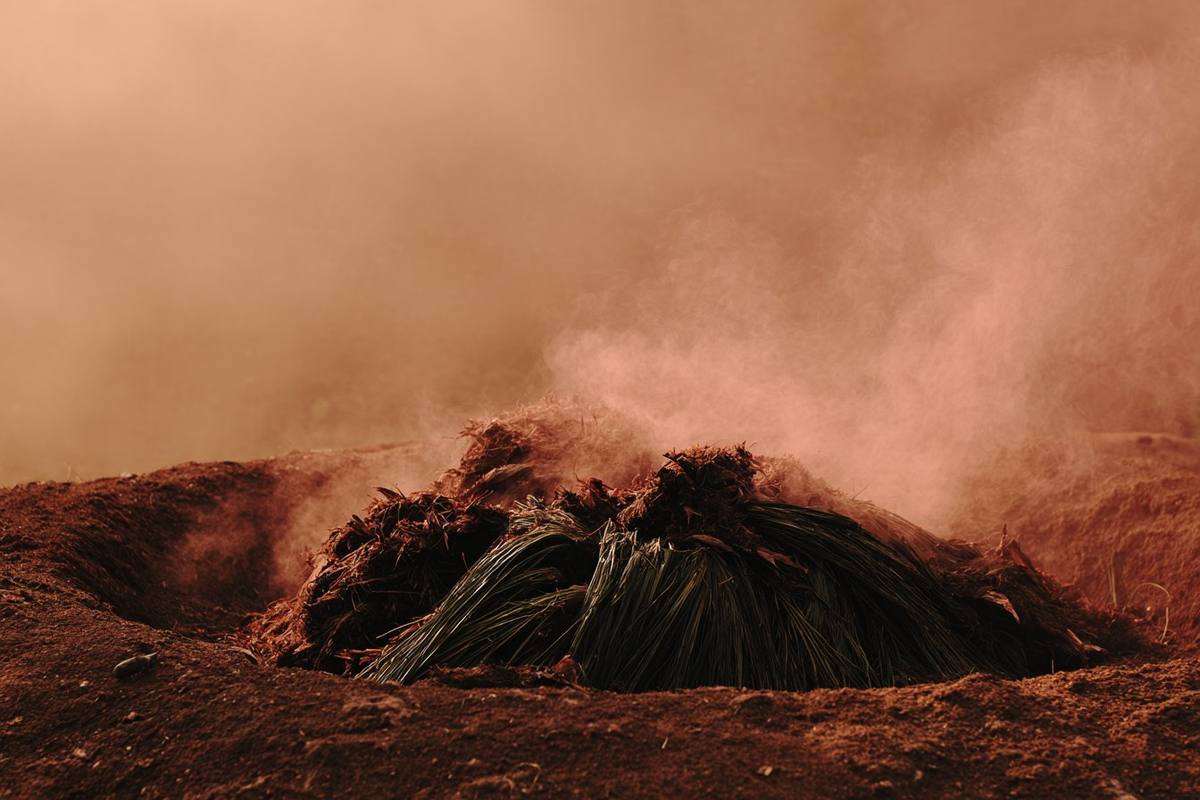
The piñas are placed in an earthen pit oven: a conical hole dug into the ground, lined with volcanic rock, heated with hardwood fire for hours, then sealed with earth, agave fibre, and sometimes palm mats. The pit roasts for three to five days. This slow, underground cooking converts the agave’s complex carbohydrates into fermentable sugars. It is also where mezcal gets its smoke — though in a well-made spirit, the smoke is an accent, not a mask.
3. Crushing
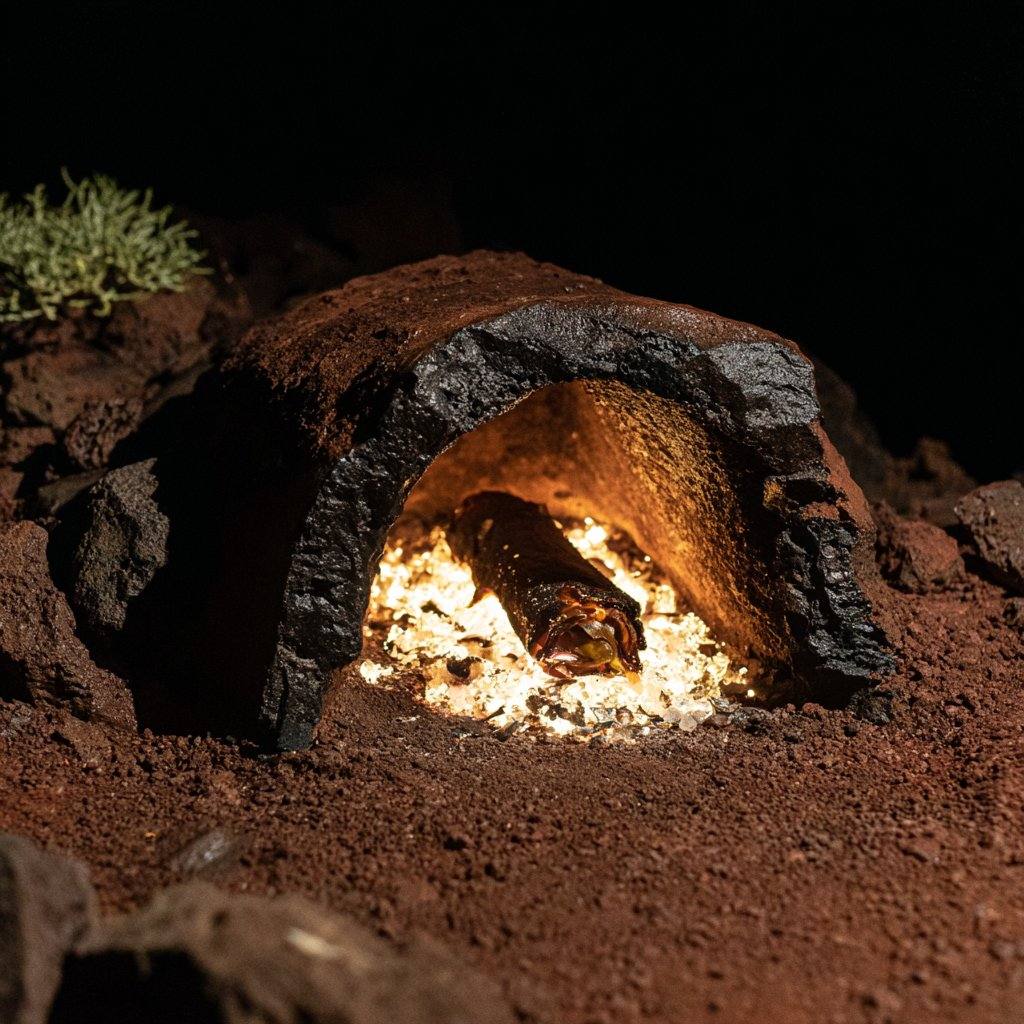
Once roasted, the piñas must be crushed to release their sweet juices. There are several methods. The tahona is a massive stone wheel, often weighing over a tonne, drawn in a circular path by a horse or mule. The mazo uses hand-wielded wooden mallets — the most ancient and labour-intensive method. Some producers use a Chilean-style mill. Each method extracts the juice differently and contributes to the spirit’s final texture.
4. Fermentation
The crushed agave — juice and fibre together — is placed in open-air vats, typically made from pine or occasionally stone or animal hide. No yeast is added. No temperature is controlled. The fermentation relies entirely on wild, ambient microorganisms: the yeasts and bacteria that live in the air, in the wood, in the palenque itself. This means the fermentation is shaped not just by the agave but by the altitude, the season, the weather, and the place. It can take anywhere from five days to three weeks.
This is why no two batches are identical. The same maestro, the same agave, the same palenque — but a different week, different weather, different yeasts in the air. The spirit is alive until the moment it enters the still.
5. Distillation
The fermented liquid (and often the fibre) is distilled twice. Artisanal producers use copper alembics; ancestral producers use clay pots. In both cases, the maestro mezcalero makes the cuts by hand — tasting throughout to decide when to separate the heads (harsh, volatile compounds), the heart (the good spirit), and the tails (heavy, oily compounds). There is no instrument for this. It is done by palate, by experience, by the accumulated knowledge of generations.
The spirit that emerges is clear, unaged, and ready. It is mezcal joven — young mezcal — and for the serious expressions, this is exactly how it should be drunk. No barrel, no ageing, nothing between you and the plant.