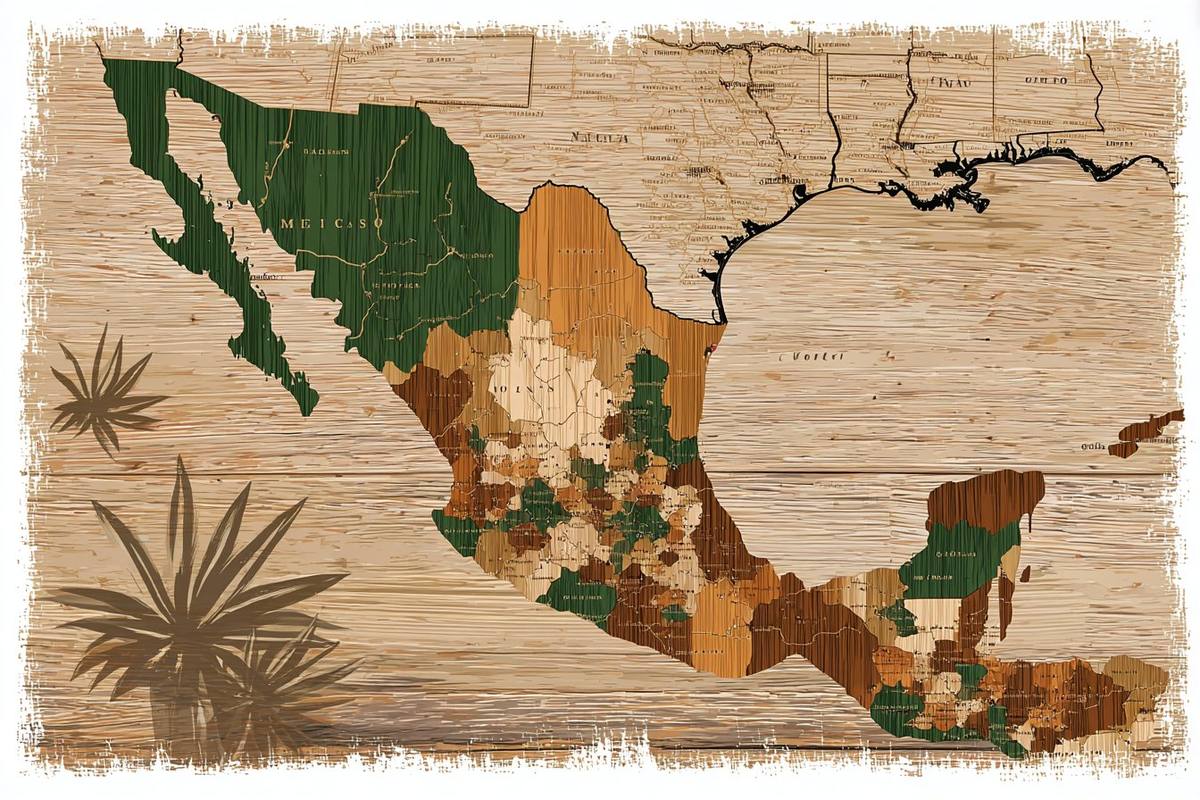
Mezcal’s denomination of origin covers nine states: Oaxaca, Durango, Guerrero, Puebla, San Luis Potosí, Zacatecas, Guanajuato, Michoacán, and Tamaulipas. Each has its own agave species, terroir, traditions, and production styles. Most mezcal on the market comes from Oaxaca, but the other states are increasingly recognised for the quality and distinctiveness of their spirits.
Oaxaca
The heartland. Oaxaca produces roughly 85% of all certified mezcal. Its mountainous terrain, varied microclimates, and deep cultural traditions make it the most diverse mezcal-producing state. The Central Valleys around Santiago Matatlán — the self-declared “world capital of mezcal” — are home to hundreds of palenques. Gota Gorda’s maestros, Felipe Garcia and Felix Ángeles, both work in Oaxaca: in San Simón Almolongas and Santa Catarina Minas respectively.
Durango
Known for its cenizo agave (Agave durangensis), which produces spirits with a distinctive mineral, herbaceous quality. Durango’s high-altitude desert terrain creates agave with concentrated sugars and intense character.
Guerrero
A state with deep mezcal traditions that are only recently gaining wider recognition. Guerrero’s producers work with agave cupreata and other local species, often using ancestral methods that predate the current regulatory framework.
Puebla
Relatively small-scale but culturally significant. Puebla’s mezcal traditions are closely tied to local indigenous communities and the wild agaves that grow in its mountainous terrain.
San Luis Potosí
Home to a distinct agave spirit tradition that uses Agave salmiana and produces spirits with a unique vegetal, almost savoury quality. The high desert here creates terroir conditions unlike anywhere else in Mexico.
And the Rest
Zacatecas, Guanajuato, Michoacán, and Tamaulipas each contribute their own species, methods, and expressions to the broader world of mezcal. Many producers in these states are small, family-run operations working with species and methods that are specific to their region and virtually unknown outside it.
Gota Gorda currently works with producers across Oaxaca, Durango, Puebla, and Guerrero — with the ambition of eventually representing families from all nine states.
It is worth noting that agave distillates are also produced in states outside the denomination of origin — Jalisco, México, Sonora, and others. These spirits cannot legally be called mezcal. They are labelled destilado de agave or destilado de maguey. Some are outstanding. The label is not a mark of quality — it is a mark of geography and bureaucracy.